|
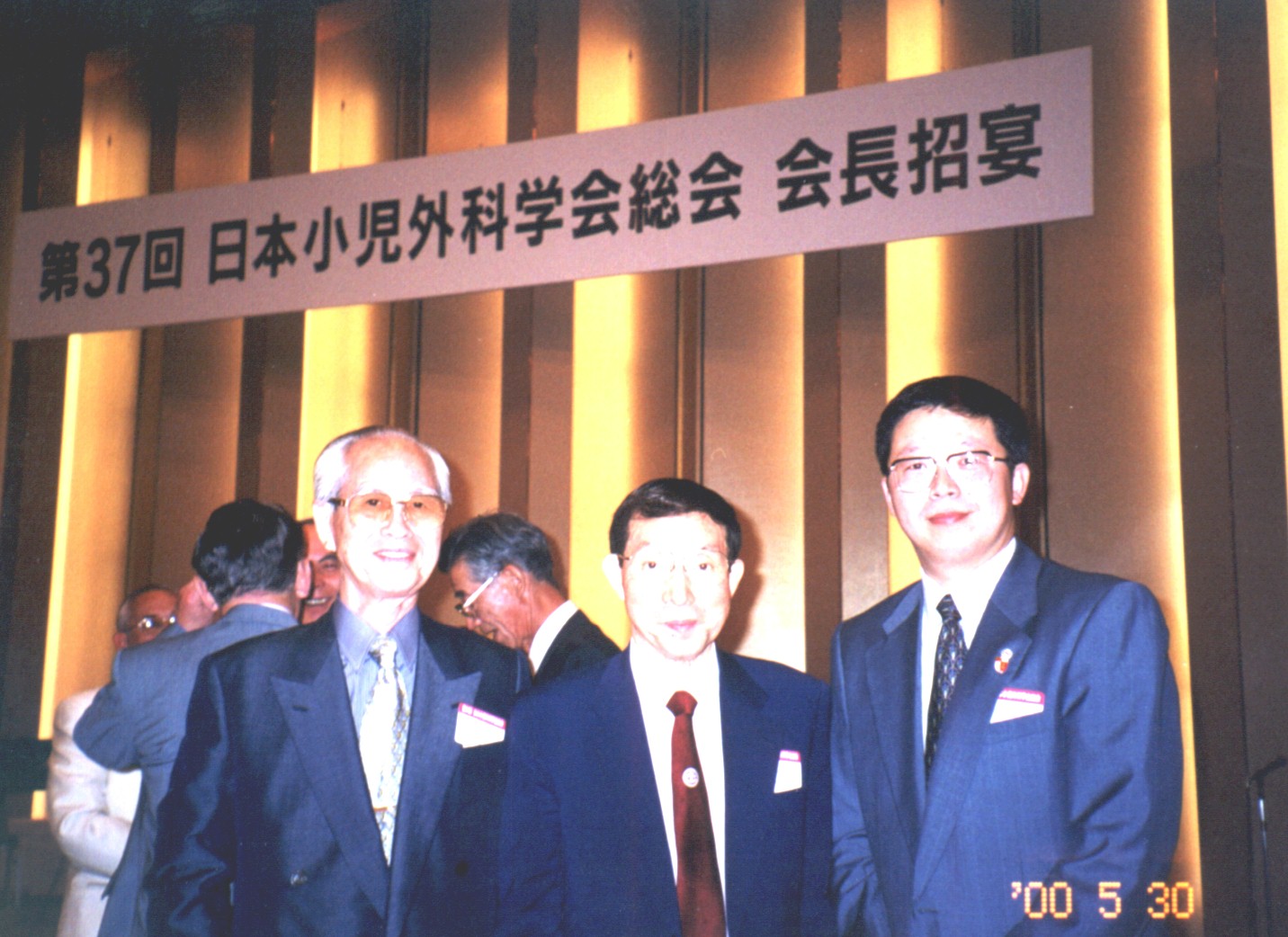
日本第37届小儿外科年会于新千年第一年的春天在日本美丽的海滨城市福冈举行。我有幸受到本届主席水田祥代教授的盛情邀请,与近千位日本小儿外科同道及20位来自美国、德国、西班牙等国家的特邀佳宾一起参加了这次盛会。
会上见到了许多位老朋友、恩师, 也见到了许多敬慕已久的学术泰斗。
如下的几幅照片为一剪影。
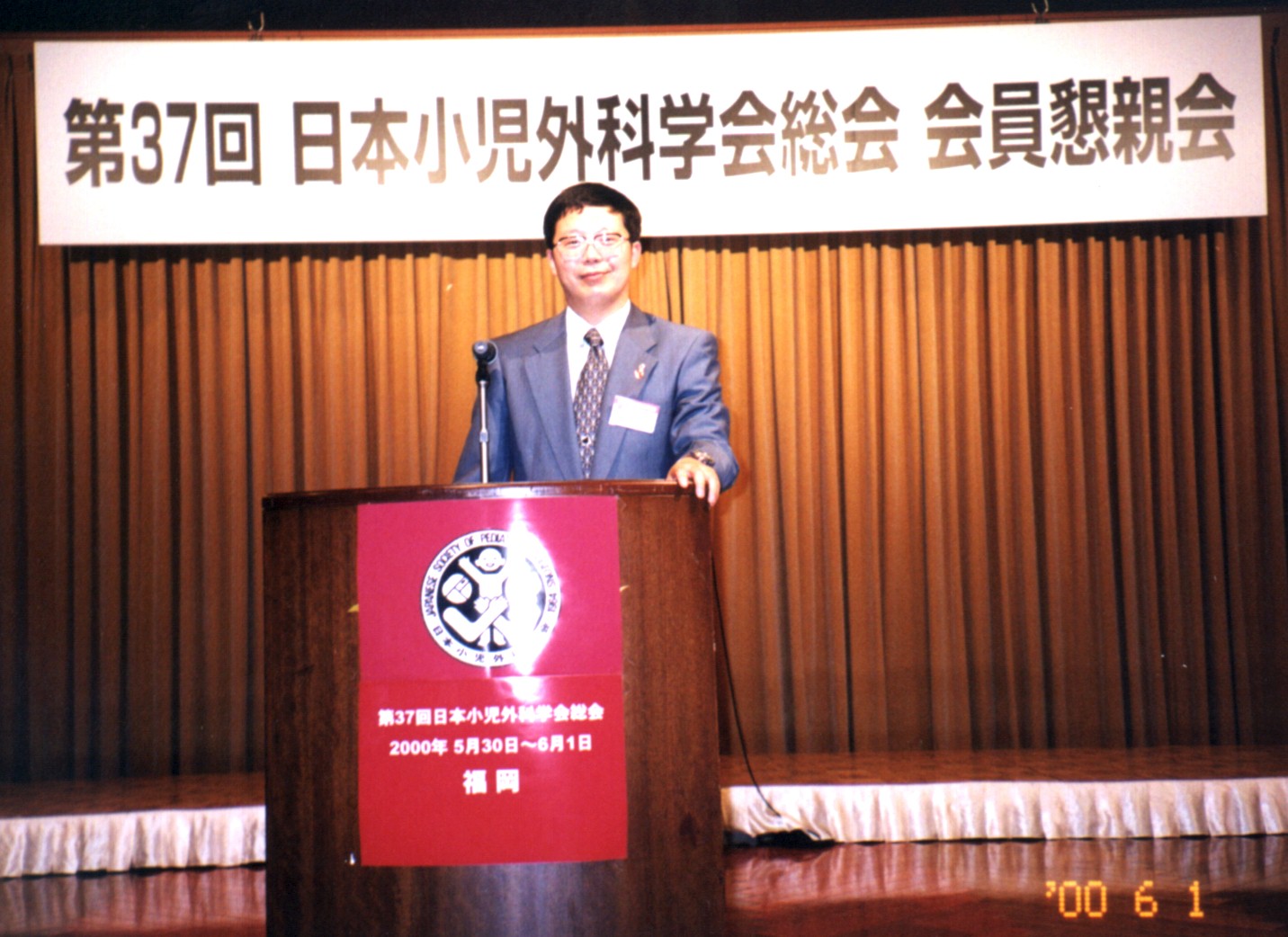
1、在大会作特别讲演.
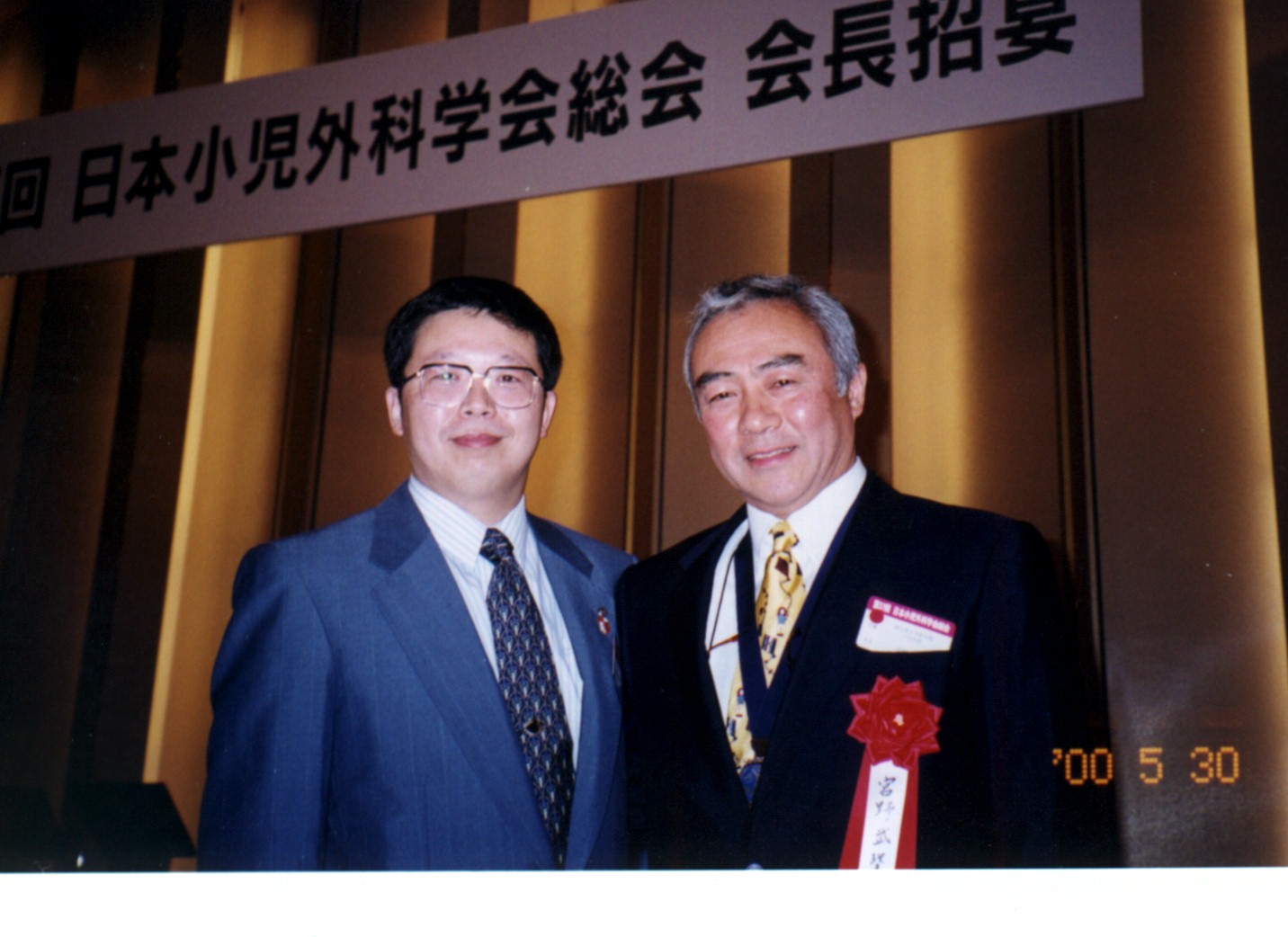
2、与日本小儿外科学会理事长宫野武教授一起、宫野教授一直关照着自己的成长.
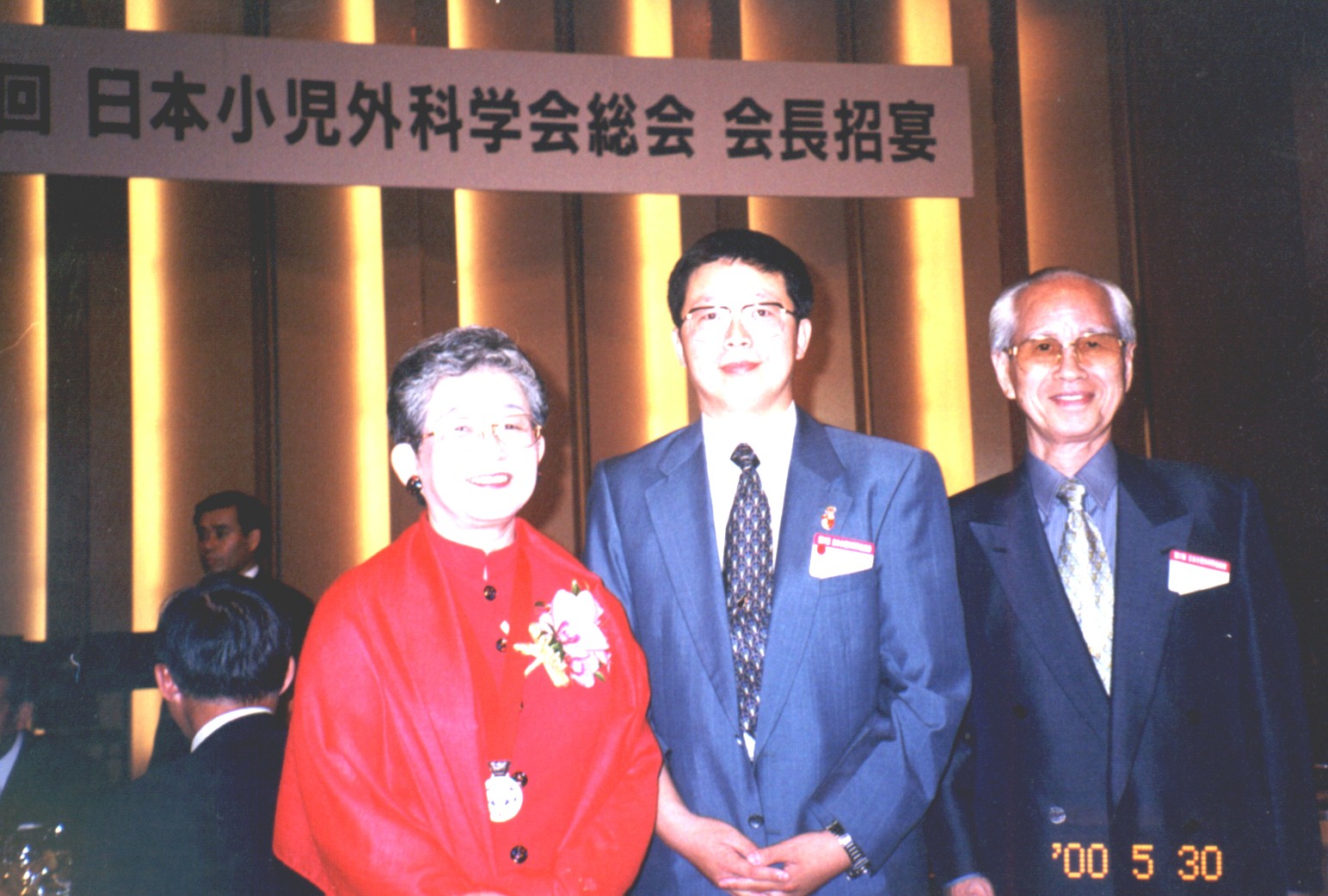
3、本届会长水田祥代教授、秋本病院理事长秋本先生.
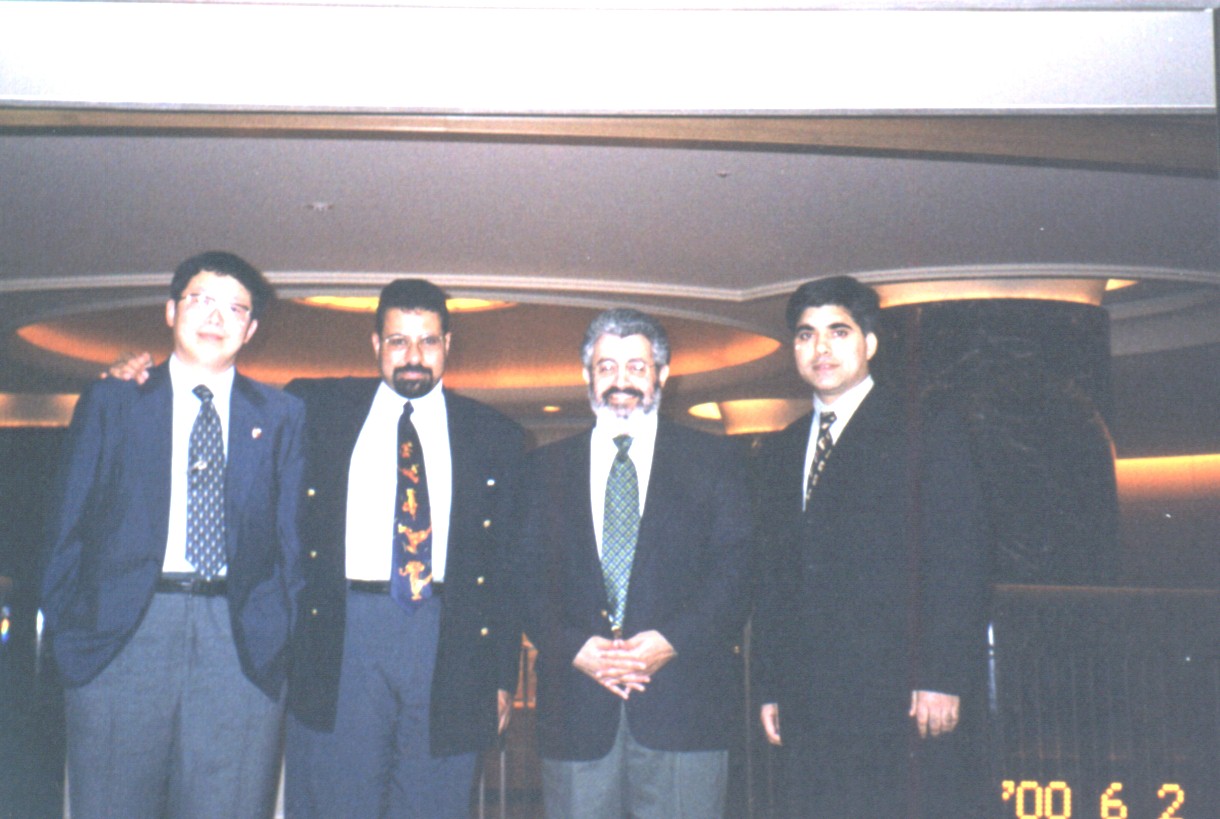
4、参会的美国、德国特邀佳宾.
5、与德高望重的日本小儿外科之父,骏河敬次郎教授一起, 骏河手术大名鼎鼎。
Memorable Studying Experience in Japan
and Its Great Helps for My Pediatric Surgery Career in China
Dong Qian M.D. Ph.D. Professor of Pediatric Surgery
Vice President of the Affiliated Hospital of Medical College, QingDao University,
Editorial Board of Chinese Journal of Pediatric Surgery
Committee Member of Chinese Association of Pediatric Surgery
Jiang su road 16, 266003, QingDao, P R China
E-mail: dong.qian@qdumh.qd.sd.cn http://dongqian.cbd.itgo.com ( personal homepage)
At the beginning of the new century, I received a letter from Professor Suita, the Congress Chairperson of the 37th Annual Meeting of JSPS. Professor Suita kindly invited me to make a presentation in this special session " Welcome back lecture" on how my achievement in Japan may contribute to my current clinical and research activities, and what academic achievements I have obtained since I came back from Japan. I was so happy and excited to receive the letter and considered it a great honour to be invited. The title -"welcome back lecture" gave me a very warm feelings and reminded me immediately of the great time I had in Japan.
It is about ten years ago, Professor Komi (At that time, he was a professor of the first department of surgery, Tokushima university, Japan) came to Shanghai to give a lecture on the anomalous arrangement of panreatico-biliary duct union in Children's Hospital of Shanghai Medical University. I was very much impressed by Professor's report and the way he gave the lecture and can still remember the scene clearly today after ten years' time. Professor Komi was not tall. After his lecture and his going around the ward, his figure became greater and greater inside my heart. It is this opportunity that I came to know Professor Komi and was given the chance to study in Japan as well as to see the world out of China through this window opened by professor Komi.
While I was in Japan, I was fortunate enough to study under the suervision of Professor Komi Nobuhiko, and later Professor Tashiro Seiki. I learned a lot from them as well as from other Japanese pediatric surgeons. I was greatly benefited not only by the knowledge of pediatric surgery, but also by their behaviour model of how to become a good doctor, and earnest, hard working surgeon and to be most important a noble person.
With the excellent direction of my Japanese teachers, I completed my research work about the " Mutagenicity of the bile of dogs with an experimental model of an anomalous arrangement of the pancreaticobiliary duct " in one year. Here I would like to take this opportunity to give a brief introduction about my work on "the carcinogenesis of the biliary tract in the condition of anomalous arrangement of the pancreaticobiliary duct", which was a new hypothesis based on my previous research results in Japan. The work was published in the famous journal Carcinogenesis 1993 Apr;14(4):743-7. The purpose of the research work is to study the reasons for the high incidence of biliary carcinoma in patients with anomalous arrangement of the pancreaticobiliary duct (APBD). Here it is introduced below in brief. To learn the reasons for the high incidence of biliary carcinoma in patients with anomalous arrangement of the pancreaticobiliary duct (APBD) mutagenicity of the bile of APBD-modeled dogs that had received a dorsal pancreatico-cholecystostomy was assayed by the Ames Salmonella mutation test. The bile from two out of 18 APBD dogs was mutagenic for Salmonella typhimurium strain TA98 under the condition of metabolic activation by rat liver S9 fraction, while the bile from 17 normal dogs was not mutagenic. Furthermore, the bile from five APBD dogs i.p. administered 1-nitropyrene (1-NP), which is a typical environmental mutagen, was more mutagenic for strain TA98 than that from 1-NP-treated normal dogs. The bile from the APBD dogs had very high amylase activity, indicating that the bile contained pancreatic juice as a result of the pancreatico-cholecystostomy. When pancreatic juice from a normal dog was added to the bile from 1-NP-treated normal dogs, mutagenicity of the bile increased 1.6- to 2.0-fold. Furthermore, sulfatase increased the mutagenic activity of the bile in the presence of the pancreatic juice. HPLC revealed that the bile from a 1-NP-treated APBD dog contained mutagenic 1-nitro-6/8-hydroxypyrene and 1-nitro-3-hydroxypyrene, while bile from a 1-NP-treated normal dog did not contain these deconjugated products. The pancreatic juice from a normal dog had very high gamma-glutamyltransferase (GGT) and aminopeptidase activities and low sulfatase activity, but it had no beta-glucuronidase activity. In addition, the bacteria that easily infect the biliary duct of APBD dogs, Escherichia coli, Klebsiella, Enterobacter and Proteus, had high beta-glucuronidase activity. In particular, Klebsiella showed a very high sulfatase activity. These results suggest that pancreatic juice enzymes and bacteria infecting the biliary duct deconjugate the detoxified mutagens in the bile and induce mutagenicity of the bile from APBD dogs or APBD patients. I was also invited to attended the 30th conference of Japanese Society of Biliary Tract Disease and the first International Conference of Gastroenterestinal Carcinogenesis, to introduce my research results.
While I was preparing this brief introduction on the carcinogenesis of the biliary tract in the condition of anomalous arrangement of the pancreaticobiliary duct, I could not help recalling my another Japanese teacher, Associate Professor Takemi Kinuchi and the day. It wasa Sunday a Sunday of the end of the year 1997, when I opened my computer to check the mail box, I surprised greatly and my heart was severely hit by a letter from Professor Onishi ( Professor of the Department of Bacteriology ). This is a letter professor Onishi wrote to my wife and me, in the letter he said, "with great regret I inform you of the death of Associate Professor Takemi Kinouchi, Department of Bacteriology, School of Medicine, University of Tokushima. He died of bone metastases of a malignant tumor of unknown origin tumor on 27 December 1997 at the age of 45, after hospitalization for a month. His notable contribution to the field of microbiology and carcinogenesis and his leadership in their application to cancer prevention won him respect both nationally and internationally. We always remember him, not only as a scientist but as a friend and for humanity." After reading the mail, I felt my heart almost was broken into many pieces. The tears flowed across my face. Oh, my God, my dear teacher, Dr. Kinouchi died, died from cancer, the disease he fight against for his whole life. I will never forget the days I spent together with Dr. Kinouchi. When I did the research work about the carcinogenesis of the biliary tract, I spent several months in the department of bacteriology under the direction of Dr. Kinouchi. He always worked very hard. In order to know the mechanism of carcinogenesis, we must prepare some pure carcinogenic substance. Dr. Kinouchi always did the preparing work by himself in spite of the carcinogen maybe inducing cancer. Just Japanese teacher such as Dr. Kinouchi's excelsior working spirit urge on me to work hard in my future life.
In 1992, I came back to my hospital (an University Hospital with 1050 beds, 1800 staff) in Qing Dao city, in Qing Dao there is about 6800000 population. The large amounts of patients, the large needs from the big population brought my knowledge studied in Japan into playing a great role. It really gave me a very useful and great large |
|
field to play an important role to help my patients and managing the hospital. I used the knowledge studied in Japan in my clinical and scientific research work and obtained quite good results. Because of my studying and researching experience in the fields of congenital biliary dilatation in Japan, I became a little famous expert for such disease in a very short time. In these years, as an operator, performed most kinds of general surgical, thoracic surgical, urological operations and tumor operation for children. In the field of hepatic and biliary surgery, recently have done many operations successfully, for 38 cases of congenital choledochal cyst, 12 cases of biliary atresia and 6 cases of hepatic malignant tumor.
Because of the excellent clinical and research work, recently I have obtained some Science Research Award from the Minister of Health of China and the Provincial Government. "Studies on the mechanism of biliary Carcinogenesis in patients with an anomalous arrangement of the pancreaticobiliary duct" had been published in English, Chinese and Japanese Journal and got the scientific reward from Provincial Government. "Studies on the etiology of congenital biliary dilitation." had been published in Chinese Journal and Obtained the scientific reward from Minister of Education of China. "Studies on the malignant tumor of children " had been published in Chinese Journal and got the scientific reward from Minister of Health of China. In the end of 1995, I was recommended by my university and was determined as a professor of pediatric surgery by the Provincial Academic Committee of ShanDong province. I became the youngest professor of pediatric surgery in whole of China and in whole of medicine circle in ShanDong province. In 1997, I was elected as the vice president of the Affiliated Hospital of Medical College, QingDao University and could do more work for the Chinese patients and also for pediatric surgery of China. In 1999, I was selected as one of the BEST 100 Doctors from all of China, also the unique pediatric surgeon in all of the 100 doctors. I know distinctly that it was the greatest honor for a physician in China, so I must do my work harder and harder. The China Center Television (CCTV, usually has 400,000,000 audiences) also introduced me in a special health column. The experience of my studying in Japan helps me very much. I believe that if I had no the experience of studying in Japan, I could not get such achievements. Therefore, I appreciate my kind Japanese teachers very much.
In my city, Qing Dao (The population of Qing Dao is 6,800,000), there are almost 800 Japanese people and more other foreign people living here. They might have some health problem in their life, I always tried my hard to help them when they had some health problems. In a book edited by the Japanese people living in QingdDao, "Life guideline in QingDao city", my name, telephone number was written on that, so I often got some phone call from Japanese people even in holiday and at night. A Japanese friend in Qing Dao said:" Dr. Dong almost becomes the family doctor of Japanese people living in Qing Dao." I know if it is possible, I should repay the kindness for my dear professor Komi, Dr. Kinouchi, Professor Tashiro, and many many Japanese teachers. Now, I can do some thing for the Japanese people and also for the other foreign friends living in QingDao. If my Japanese teachers know that, they must be very pleased, just like I repaying for them. My Japanese professor told me that we should do something to make the world more beautiful.
In my growing up period, a lot of professors of pediatric surgery both in China and Japan, such as the most famous expert in China, Professor Zhang Jinzhe, my director professor Jin Baixiang, my director professor Nobuhiko Komi, professor Seiki Tashiro, professor Yoshinari Onishi, Dr. Takemi Kinouchi, professor Miyano, professor Suita, Dr. Shyuhei Ogita, Professor Okawa, and many many teachers, took a great care to me. I will remember their benefaction forever. In these three years, I always was invited to be an interpreter in the Sino-Japan Pediatric Surgery Conference. I really want to do some thing, even a little, for the Sino-Japan Pediatric Surgery. Also want to be a small bridge between the Japan pediatric surgery and China Pediatric Surgery.
|
|
|
